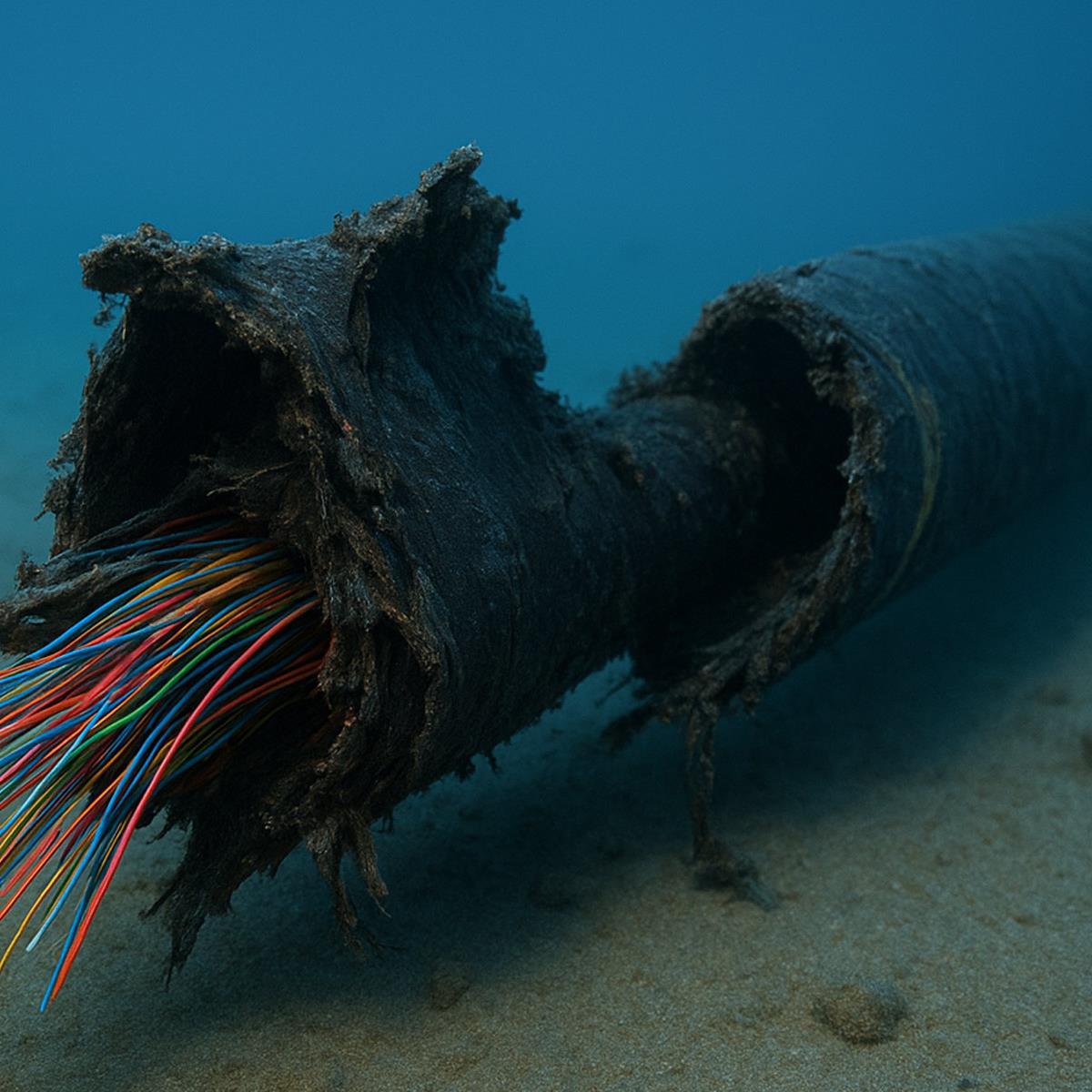
Subsea Internet Cable
The Digital Infrastructure Connecting Global Communities
Keywords:
Submarine Cables, Subsea Internet Cables, Digital Infrastructure, Global Connectivity, Digital DivideAbstract
Subsea internet cables are the physical backbone of global digital connectivity, carrying more than 99% of intercontinental data traffic, although their physical numbers are relatively limited and most of their holdings are concentrated in a handful of consortiums and giant technology companies. This article reviews the role of subsea cable in supporting the digital transformation of global society, the accompanying geopolitical and security challenges in the wake of increasing incidents of sabotage and cable breakdowns, and its impact on the digital divide between countries. The study was conducted through a review of the narrative literature on academic research and recent think-tank reports on the governance, security, and economics of submarine cable infrastructure. The results of the review show that the three approaches that have dominated the discourse, namely the technical-infrastructural approach, national security, and economic development, each have both contributions and limitations, and are rarely studied in an integrated manner. This article concludes that a more holistic governance framework is needed, which balances technical, security, and equitable digital access considerations from the planning stage, so that the benefits of subsea cable connectivity can be felt equally by the global community, including archipelagic countries such as Indonesia.
References
[1] Insikt Group, "Submarine Cables Face Increasing Threats Amid Geopolitical Tensions and Limited Repair Capacity," Recorded Future, Threat Analysis Report TA-2025-0717, Jul. 2025. [Online]. Available: https://go.recordedfuture.com/hubfs/reports/ta-2025-0717.pdf
[2] X. Ma and C. Jiang, "Global submarine cable network and digital divide," Journal of Geographical Sciences, vol. 35, no. 6, pp. 1204–1232, 2025, doi: 10.1007/s11442-025-2364-x.
[3] T. Liebetrau and C. Bueger, "Protecting hidden infrastructure: The security politics of the global submarine data cable network," Contemporary Security Policy, vol. 42, no. 3, pp. 391–413, 2021, doi: 10.1080/13523260.2021.1907129.
[4 K. Govella and M. Tsuchiya, "Undersea cables and the extension of empire: The rise of Britain, Japan, and the United States and the competition to connect Hawai'i," Marine Policy, 2025, doi: 10.1016/j.marpol.2025.106844.
[5] H. McGeachy, "The changing strategic significance of submarine cables: Old technology, new concerns," Australian Journal of International Affairs, vol. 76, no. 2, pp. 161–177, 2022.
[6] J. Cariolle, "Telecommunication Submarine-Cable Deployment and the Digital Divide in Sub-Saharan Africa," FERDI Working Paper P241 / CESifo Working Paper No. 7415, 2018 (rev. 2019).
[7] P. Sellari, "Digital Arteries and Geopolitical Fault Lines: The Strategic Dimension of Submarine Telecommunications Cables," in Proc. Int. Sci. Conf. Squaring the Circle: The New Global Dynamics, 2026, pp. 45–48, doi: 10.46793/7067.3731.045S.
[8] L. Zhao and C. Mu, "Research on Global International Communication Submarine Cable Policy Trends," Study on Optical Communications, vol. 51, no. 4, art. 250084, 2025, doi: 10.13756/j.gtxyj.2025.250084.
[9] A. Friedman, "Submarine telecommunication cables and a biodiversity agreement in ABNJ: Finding new routes for cooperation," The International Journal of Marine and Coastal Law, vol. 32, no. 1, pp. 1–35, 2017.
[10] New Wave Media / Marine Technology News, "Subsea Cable Risk a Mix of Bathymetry and Geopolitics," Jan. 2026.